
Introduction
Climate Transition Plans (CTPs) have become essential instruments for countries to tackle the pressing issues related to climate change. These comprehensive strategies outline a country’s roadmap for reducing greenhouse gas emissions, adapting to climate impacts, and transitioning towards a more sustainable, low-carbon economy. As countries like Nigeria grapple with the complexities of climate action, the effectiveness of these plans hinges on their ability to address key sectors that contribute to climate change comprehensively and synergistically.
One such critical sector is agriculture, which lies at the heart of food security, economic development, and environmental sustainability. Climate change has recently severely impacted Nigeria’s agricultural sector, reducing crop yields and threatening food security. In 2022, severe floods damaged over 100,000 hectares of key crops like cassava, rice, and plantains, contributing to lower yields and increased food insecurity. This incident was part of a broader trend of climate-induced disruptions, including rising temperatures, changing rainfall patterns, and desertification in the northern part of the country. These factors have reduced agricultural productivity, with livestock production expected to drop by 10-15% and fisheries potentially seeing a 30% reduction in output by 2050. Additionally, the Nigerian Meteorological Agency (NiMet) projects that average temperatures in Nigeria could rise by 1.5°C to 3°C by 2050. This increase in temperature can lead to heat stress in crops, reducing yields of staple crops such as maize, rice, and sorghum by up to 20%.
Nigeria is currently grappling with a severe hunger crisis, with 31.8 million people classified as food insecure, according to the UN Food and Agriculture Organisation in 2022. This situation has worsened in recent years, driven by food inflation nearing 30%, violence that has displaced millions, and insecurity that has disrupted farming in the northern regions. An alarming consequence of this food insecurity is the skyrocketing number of children suffering from acute malnutrition, especially in northern Nigeria, where Médecins Sans Frontières (MSF) reports a 60% increase in child malnutrition cases compared to last year. The lean season, which typically lasts from June to September, exacerbates this situation, with the World Food Programme projecting that 26.5 million Nigerians could face acute hunger by the end of the season. Given these statistics, Nigeria now holds the unfortunate distinction of having the largest population of food-insecure people globally.
These challenges highlight the need for a comprehensive approach to addressing the complex issues facing Nigeria’s agricultural sector. Traditional agricultural adaptation and resilience approaches often need to address the interconnected challenges facing food production, distribution and consumption. This limitation has led to a growing recognition of the importance of viewing agriculture through the lens of food systems.
A food system encompasses the entire range of actors and their interlinked value-adding activities involved in producing, aggregating, processing, distributing, consuming, and disposing of food. It includes sub-systems such as farming, waste management, and input supply, and interacts with other key systems like energy, trade, finance, technology, and health.

Figure 1: Food Systems Wheel. Source: FAO, Sustainable Food Systems Concept and Framework
The food systems approach offers a holistic framework for understanding and addressing the complex challenges in agriculture and food security. As defined by the Food and Agriculture Organisation (FAO), a sustainable food system delivers food security and nutrition for all in a way that ensures economic, social, and environmental sustainability for future generations. This approach considers the food system in its totality, considering all elements, interrelationships, and related effects. It expands the way issues are framed and analysed beyond the boundaries of individual disciplines, subsystems, or sectors. As a result, it allows for a more comprehensive understanding of a given issue as the product of a complex network of interconnected activities. According to the FAO, “The food systems approach considers all relevant causal variables of a problem and all social, environmental, and economic impacts of the solutions to achieve transformational systemic changes.”
Why take a Food Systems Approach?

Image Source: Resilient Food Systems
A food systems approach is crucial because it recognises the intricate web of interconnections between various stages of food production, processing, distribution, consumption, and waste management, alongside their environmental, social, and economic impacts. This holistic perspective is particularly vital for Nigeria, given the complex challenges the country faces in terms of climate vulnerability, food insecurity, and rural poverty.
The food systems approach, as articulated by the FAO, encompasses the entire range of actors and their interlinked value-adding activities involved in the food cycle. It considers the core system of food-related activities and the societal and natural elements in which these activities are embedded. For Nigeria, this means looking beyond just agricultural production to understand how factors such as urbanisation, changing consumption patterns, climate change, and natural resource depletion are impacting food security and nutrition.
It helps address problems like gender inequality in food production, supply chain disruptions, and malnutrition by concentrating on the system as a whole rather than on individual sectors. It allows for a more comprehensive understanding of the root causes of food system underperformance, which in Nigeria’s case might include structural issues such as inadequate infrastructure, limited access to markets for smallholder farmers, or policies that inadvertently disadvantage certain groups.
The food systems approach encourages practices considering the interconnected feedback loops between agriculture, public health, and environmental impacts to promote sustainability. This is particularly important for Nigeria, where common agricultural practices such as slash-and-burn agriculture, overgrazing, mono-cropping and limited use of sustainable practices have significant environmental consequences, including deforestation and soil degradation. A food systems approach is imperative to identify synergies and trade-offs between economic, social, and environmental sustainability, ensuring that efforts to drive agricultural productivity do not come at the cost of long-term social, economic, and environmental health.
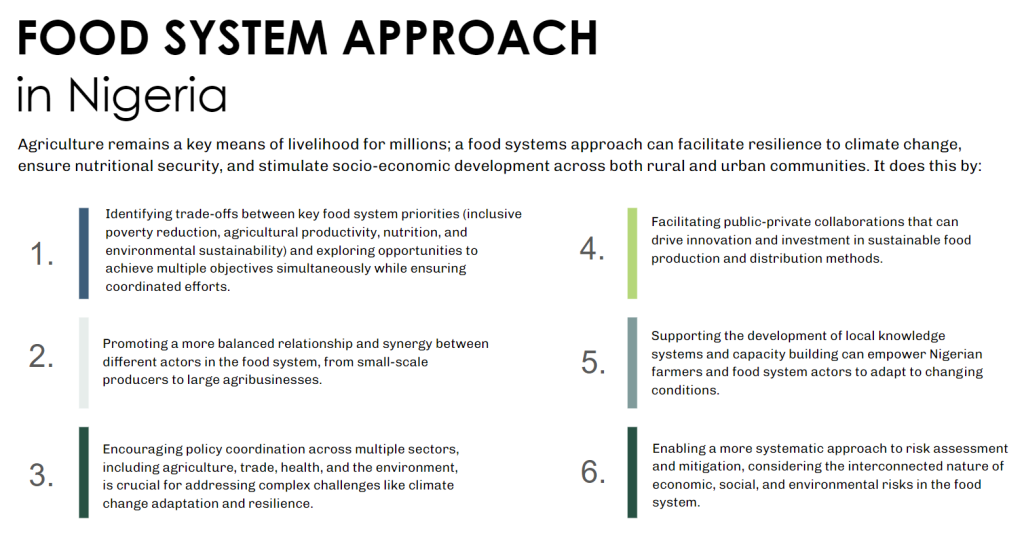
Figure 2: Food Systems Approach in Nigeria
This article aims to analyse climate transition plans in Nigeria through the lens of the food systems approach. We will examine how many of these plans incorporate a food systems perspective in their adaptation and mitigation approaches, assess the nature of their approach, evaluate the priority given to food systems in terms of budget allocation, and review the timeframes set for achieving food systems-related goals. Through this analysis, we intend to shed light on the extent to which Nigeria’s climate strategies align with the holistic, interconnected thinking required to create truly sustainable and resilient food systems in the face of climate change.
Overview and Analysis of Nigeria’s Climate Transition Plans
Nigeria’s Energy Transition Plan

Image Source: resourcegovernance.org
The Energy Transition Plan (ETP) of Nigeria was created in 2021 to achieve net-zero emissions by 2060 while meeting the nation’s energy requirements and promoting economic expansion. The plan is supported by the COP26 Energy Transition Council and outlines key initiatives such as scaling up renewable energy, promoting electric vehicles, and phasing out gas by mid-century. The plan outlines a comprehensive set of goals, including scaling up energy access, transitioning to renewable energy, and phasing out gas by mid-century, with an estimated $410 billion in funding needed. It seeks to create jobs, enhance economic opportunities, and position Nigeria as a leader in Africa’s energy transition.
This plan is an important step toward addressing Nigeria’s energy needs and its role in global climate action. It prioritises sectors like energy generation, transport, and infrastructure, promoting solar energy, electric vehicles, and gas commercialisation. These are critical areas for reducing emissions and promoting economic growth. However, despite its detailed scope, the ETP does not mention or incorporate a food systems approach, a gap that could limit its overall effectiveness in addressing food security and climate resilience comprehensively.
The ETP’s Sensitivity to the Food Systems Approach
One of the main shortcomings of the ETP is its lack of focus on food systems, despite the growing food insecurity and climate vulnerability in Nigeria. As of 2023, an estimated 25 million Nigerians are at risk of hunger, a problem exacerbated by climate change through increased flooding, droughts, and rising temperatures. In this context, energy transition and food system resilience are inherently linked. While the ETP emphasises clean energy and sustainable infrastructure; the omission of food systems means it overlooks a national priority that is very vulnerable to climate change.
Fundamentally, the ETP exhibits solid economic underpinnings, as evidenced by the establishment of transparent financing mechanisms to crowd in private sector investment and the achievement of cost-reflective tariffs. The plan’s emphasis on job creation—projecting 840,000 new positions by 2060—and its emphasis on inclusive transition shows promising social considerations. Environmental sustainability is addressed through a clear pathway to net-zero emissions and initiatives like gas flaring elimination.
However, the plan’s structure reveals limited explicit consideration of food systems infrastructure. While it outlines investments across power, residential buildings, industry, transport, and oil and gas sectors, the specific energy needs of agricultural production, food processing, and distribution remain largely unaddressed. This oversight could have far-reaching implications for food security and agricultural productivity.
Considering that the complex energy requirements of modern agriculture – irrigation systems, cold chain infrastructure, and farm machinery – all depend heavily on reliable energy access and Nigeria’s precarious food situation, food systems should be an integral part of the country’s energy transition plan. Food processing facilities, both large-scale industrial operations and small-scale rural units, require consistent energy to maintain food availability, safety and reduce waste. The transformation of transport systems, while mentioned in the ETP, doesn’t specifically address the unique challenges of food distribution networks.
The social implications of this energy-food intersection are particularly significant in rural areas, where agricultural communities often face the greatest energy access challenges. While the ETP includes laudable goals like electrifying 10,000 healthcare centres, it doesn’t explicitly address how the energy transition will support rural agricultural development or impact food accessibility.
A food systems approach would integrate strategies to enhance the resilience of the entire food supply chain—from production to distribution and consumption—acknowledging that energy access directly affects agricultural productivity, food processing, and distribution networks. Without an explicit focus on food systems, the plan misses an opportunity to address nutritional outcomes, market stability, and sustainable agricultural practices, all of which are vital for food security in a rapidly changing climate.
Positive Impact of Energy Projects on Food Systems
To its credit, several components of the ETP will likely have indirect benefits for food systems. This includes:
- The deployment of solar home systems and mini-grids across Nigeria will improve energy access in rural and agricultural regions, potentially enhancing irrigation, cold storage, and food processing capabilities.
- The clean cooking initiative aims to transition 30 million households away from fuels like charcoal and kerosene, reducing deforestation and air pollution, which indirectly benefits agricultural sustainability.
However, these benefits may not be optimised without a strategic focus on food systems. The energy transition initiatives should be tailored to ensure that farmers, smallholders, and food supply chains are explicitly supported through resilient infrastructure, renewable energy solutions, and climate-smart agriculture.
Need for a Food Systems Resilience Strategy
The connection between energy and food systems runs deep, touching every aspect of how we produce, process, distribute, and consume food. Yet, when examining Nigeria’s ETP through a food systems lens, several critical gaps emerge that could impact the plan’s overall effectiveness and sustainability. Given this interconnectedness, Nigeria’s ETP would benefit from the inclusion of a food systems resilience strategy. The government could better coordinate its energy objectives with the urgent need to address hunger, nutrition, and agricultural sustainability by integrating food systems into the national energy transition strategy. This would create opportunities to support local food production, reduce food waste, and ensure sustainable food distribution networks through the use of clean energy technologies.
To strengthen the ETP’s effectiveness, several key integrations are needed. First, the investment portfolio should include specific allocations for food system energy needs, from farm to fork. Second, dedicated energy transition pathways for the agricultural sector should be developed, considering both large-scale and smallholder farming operations. Third, food security metrics should be integrated into the plan’s performance indicators to ensure that energy transition supports rather than hinders food system sustainability.
Policy integration represents another crucial area for improvement. Energy policies need to be aligned with agricultural and food security policies through inter-ministerial coordination mechanisms. Specific support mechanisms for food system actors during the energy transition period could help improve food availability despite the transition to a new energy regime.
The Nigerian National Adaptation Plan

Nigeria’s National Adaptation Plan (NAP) Framework was developed in response to growing climate change risks, to address medium- and long-term adaptation needs in a coordinated manner. Formulated with the support of the NAP Global Network, the framework is a strategic guide to manage climate impacts in various sectors such as agriculture, water resources, and energy. Its overarching aim is to enhance the resilience of Nigeria’s economic, social, and ecological systems to the growing impacts of climate change. The plan emphasises the importance of cross-sectoral coordination, particularly between energy, agriculture, forestry, water resources, and health sectors.
The Department of Climate Change (DCC) under the Federal Ministry of Environment is coordinating the plan’s implementation alongside other ministries, departments, and agencies (MDAs). The NAP framework is aligned with several national policies, including the Economic Recovery & Growth Plan (ERGP) and the National Climate Change Policy Response and Strategy (NCCP-RS). The plan seeks funding from national budgets, private sector partnerships, and international sources such as the Green Climate Fund.
The NAP’s Sensitivity to the Food Systems Approach
The National Adaptation Plan (NAP) adopts a sectoral approach to addressing climate change impacts. This means that it organises adaptation strategies around key sectors like agriculture, water, forestry, energy, and health, rather than treating them as interconnected elements within a broader system. It does not explicitly frame its agricultural activities and initiatives within the broader concept of sustainable food systems as defined by the FAO. For instance, although the plan identifies climate-smart agriculture (CSA) as a key adaptation strategy to improve productivity in food production, it also targets water management and forestry separately. The NAP aims to integrate these sectoral strategies into existing policies and focusses on medium and long-term goals aligned with Nigeria’s broader development priorities. However, this strategy differs from a food systems approach where the interdependencies between food systems, trade, health, and other sectors are considered.
The NAP does not fully embrace the food systems holistic approach. While it does acknowledge climate change’s impacts on individual sectors, it doesn’t broadly frame the interactions among sectors such as trade systems, health, and waste management. For instance, although the NAP emphasises the importance of agriculture, it largely focuses on increasing yields through CSA without addressing how other elements of the food system (like the relationship between market accessibility, post-harvest processing, or nutritional outcomes and climate adaptation) fit into this strategy.
Does the NAP follow an interconnected framing and analysis of issues?
The NAP’s framing of adaptation challenges does not substantially expand to encompass the intricate network of interconnected activities and feedback that characterises a food systems approach. While the plan acknowledges the multi-sectoral nature of climate change, it stops short of recognising how actions in one sector can trigger ripple effects across others. For example, a food systems approach would account for how disruptions in agricultural production affect nutrition, public health, and even socio-economic conditions like employment in food-related industries. Instead, the NAP tends to treat each sector in isolation, focusing on discrete solutions for agriculture, water, and energy without fully considering the cross-cutting interdependencies between these systems.
In a food systems approach, the interactions between food production and other societal factors such as gender norms, education, or trade policies would also be key considerations. However, while the NAP does mention gender responsiveness and community-based approaches, it does so in a sector-specific manner without exploring how these societal factors influence the entire food system’s resilience.
In summary, the NAP framework for Nigeria is grounded in a sectoral approach, addressing specific climate impacts within individual sectors like agriculture. This differs significantly from a food systems approach, which would provide a broader, more integrated view of how food production, distribution, and consumption interact with other systems like trade, health, and energy. The NAP does not sufficiently broaden its analysis to capture the intricate web of interdependencies and feedback loops that characterise food systems. Thus, while the plan contains valuable sector-specific strategies, it lacks the comprehensive, systems-orientated perspective that a food systems approach would offer.
The Nigerian National Climate Change Policy

Image Source: Shutterstock
The National Climate Change Policy (NCCP) 2021-2030 serves as a comprehensive framework designed to guide Nigeria’s response to climate change through adaptation and mitigation strategies. This revised policy builds upon the original 2012 policy and incorporates new global climate actions like the 2015 Paris Agreement, as well as national strategies such as the Nationally Determined Contributions (NDCs). It outlines sectoral approaches for achieving climate-resilient, low-carbon growth. The Federal Ministry of Environment’s Department of Climate Change (DCC) spearheads the policy’s formulation and coordination, with input from various ministries, departments, and agencies, alongside international donors such as the United Nations Development Programme. The policy is funded through a mix of national budgets, Green Bonds, and climate finance from global institutions.
The NCCP’s Sensitivity to the Food Systems Approach
The National Climate Change Policy (NCCP) 2021-2030 outlines Nigeria’s strategies for addressing climate change through both mitigation and adaptation actions, focusing on key sectors like agriculture, energy, water, waste, and forestry. The policy acknowledges the high vulnerability of Nigeria’s agriculture and food production systems to climate change and aims to promote climate resilience and low-carbon development across sectors. The primary stakeholders in the formulation and implementation of the policy are the Federal Ministry of Environment’s Department of Climate Change (DCC), alongside contributions from relevant national ministries and international organisations such as the United Nations Development Programme (UNDP).
Like the National Adaptation Plan (NAP), the NCCP’s approach primarily concentrates on sectoral interventions as opposed to the holistic perspective that the food systems approach brings. In the agricultural sector, it implements climate-smart agriculture (CSA), which emphasises lowering greenhouse gas emissions while maintaining productivity. However, like the NAP, the NCCP does not broaden its focus to encompass the entire food system, including processing, distribution, and consumption, nor does it recognise how these elements interact with broader societal and economic structures. The NCCP’s sector-specific policies, while crucial, tend to view these sectors in isolation.
The food systems approach emphasises the complexity of food-related activities, acknowledging interdependencies between food production, consumption, and waste management, as well as their connections to broader environmental and socio-economic factors. In contrast, the NCCP’s strategy for agriculture and food security is limited to the adoption of climate-smart techniques (e.g., promoting drought-resistant crops or improving livestock practices). It does not, for example, address how these agricultural practices influence market systems, public health, or the long-term sustainability of rural livelihoods. A food systems framework would also highlight the critical role of food distribution infrastructure, the influence of climate policy on consumer behaviour, and potential feedback loops between agriculture, public health, and food processing industries.
Does the NCCP Broaden the Framing and Analysis of Issues?
The NCCP rather takes a different approach from the systemic analysis characteristic of a food systems approach. Although the plan recognises climate change as a multi-sectoral issue, its framing remains sectoral—focused on reducing emissions in agriculture, improving water use, or enhancing energy efficiency. The policy does not provide a detailed exploration of how actions in one sector (such as agriculture) might impact other areas, such as nutrition or trade dynamics. A case in point is that while the plan encourages reforestation and agroforestry to improve carbon sequestration, it does not extend this analysis to consider the implications for rural economies, food distribution, or consumer access to food.
In summary, Nigeria’s NCCP takes significant strides in addressing climate change through sector-specific strategies, different from a holistic food systems approach. The plan’s narrow sectoral focus on agriculture limits its ability to capture the interconnectedness of food systems with broader economic, health, and environmental systems. A more integrated approach could enhance the policy’s effectiveness, aligning climate resilience strategies with improvements in food security, distribution, and consumption.
The Lagos State Climate Change Action Plan

Image Source: Getty Images
The Lagos Climate Action Plan (CAP) is a strategic framework aimed at transitioning Lagos into a low-carbon, climate-resilient city by 2050. The plan was developed by the Ministry of Environment and Water Resources and is in line with the objectives of the Paris Agreement. It was supported by the C40 Cities Climate Leadership Group. The CAP is designed to address key climate risks such as flooding, rising sea levels, and heat stress, while also reducing greenhouse gas (GHG) emissions across various sectors such as energy, transport, and waste. Its funding comes from internal state resources, international partners like the Green Climate Fund (GCF), and private sector contributions. The CAP’s broad objective is to reduce emissions by 45% by 2035 and achieve carbon neutrality by 2050.
The CAP’s Sensitivity to the Food Systems Approach
The Lagos CAP’s emphasis is heavily skewed towards sectoral emissions reduction and climate adaptation, particularly in energy, transport, and waste management. However, it does not adopt a holistic food systems approach that integrates agriculture, food distribution, processing, and consumption. The plan acknowledges vulnerabilities in agriculture, noting that climate change threatens food security through impacts on farming and fisheries. Nevertheless, it focuses primarily on environmental resilience and energy efficiency rather than addressing food systems as a whole. Its strategies for agriculture are framed in terms of urban resilience towards food security, such as regenerating farm centres and exploring urban agriculture (urban agriculture is the practice of farming within an urban environment, especially the cultivation of food crops for human consumption.). However, this still falls short of a food systems approach.
The CAP’s sectoral approach treats agriculture as one of several vulnerable sectors rather than as part of a broader food system. For example, while the CAP promotes urban agriculture, it does not explore how food systems interact with waste management or transport beyond individual sectoral strategies. The integration of food systems considerations into the plan could enhance resilience, addressing how actions in waste management (like composting) support food security, or how energy-efficient supply chains can achieve both climate mitigation and food security objectives.
Priority in Terms of Timeline and Budget Allocation
The CAP outlines a five-year implementation timeline (2020-2025), with longer-term goals extending to 2050. Specific actions are prioritised based on their potential to reduce emissions quickly, cost-effectiveness, and broader societal benefits. For example, immediate priorities include reducing transport emissions by expanding the Bus Rapid Transit (BRT) system and shifting to low-emission vehicles. The CAP is projected to achieve 20% emissions reduction by 2025 and 45% by 2035.
However, the budget allocation for food-related initiatives remains unclear. Most of the identified investments focus on energy, transport, and waste management infrastructure, with limited resources for agricultural resilience or food systems. This sector appears secondary in terms of budgetary prioritisation, despite its critical importance to food security.
The Lagos CAP is a robust climate action strategy that addresses key sectors, but it lacks a holistic food systems approach. By focusing narrowly on specific sectoral targets, it misses opportunities to explore how different elements of the food system could contribute to climate resilience. Integrating a broader food systems perspective would better align Lagos’s food security objectives with its climate transition ambitions.
The Lagos Climate Adaptation and Resilience Plan (LCARP)

Image Source: ThisDayLive
The Lagos Climate Adaptation and Resilience Plan (LCARP), published in June 2024, is a comprehensive strategy developed to address the key climate risks facing Lagos, including sea level rise, extreme heat, and extreme rainfall. The plan is spearheaded by the Ministry of Environment and Water Resources, with technical and financial support from various international partners, including FSD Africa. LCARP outlines a robust project portfolio aimed at building resilient infrastructure, protecting vulnerable communities, and improving crisis response. It also emphasises the importance of mobilising up to $9 billion by 2035 through diverse financing mechanisms such as green bonds, blended finance, and public-private partnerships (PPPs). The plan’s ultimate goal is to safeguard the state from the anticipated $40 billion cost of inaction and position Lagos as a model resilient city.
LCARP’s Sensitivity to the Food Systems Approach
The LCARP is a thorough report that outlines actionable actions to improve urban resilience and reduce climate risks. It provides a detailed portfolio of 33 projects targeted at addressing Lagos’s vulnerabilities to sea-level rise, extreme heat, and flooding. The plan is commendable for its strategic focus on building resilient infrastructure, protecting vulnerable communities, and improving crisis response. However, despite its depth, LCARP overlooks food systems—a critical element in the context of Nigeria’s ongoing food insecurity crisis.
As of 2024, Nigeria is grappling with severe hunger. Recent data indicates the number of food-insecure Nigerians increased significantly, from 66.2 million in Q1 2023 to 100 million in Q1 2024, with the number likely to rise if immediate measures are not taken to address the root causes. Lagos, being a densely populated and urbanised state, is not immune to these challenges, as disruptions in food supply, distribution, and pricing affect the city’s most vulnerable populations. Given that a sizable section of Nigeria’s population lives in Lagos, the city’s level of food insecurity is consistent with the national pattern. The urban poor, many of whom depend on informal food markets, are particularly susceptible to price volatility and supply disruptions.
While the plan includes projects that will indirectly benefit agriculture and food production—such as those targeting water-resilient agriculture and waste management—it does not strategically focus on the food system as a whole. Given that climate change directly impacts food production and distribution, and given the current hunger crisis, it is concerning that food systems were not explicitly prioritised.
What the LCARP brings to the table
The LCARP brings to the table several valuable tools and frameworks for addressing climate risks. These are clearly articulated through its integrated risk assessment, advanced analytics, and clear adaptation goals.
- Integrated Risk Assessment: LCARP introduces a multi-hazard risk assessment framework that captures the interconnected nature of climate risks and their socio-economic impacts. The plan guarantees that adaptive strategies are focused and responsive to the direct and indirect effects on sectors such as livelihoods, infrastructure, and health by fully comprehending the extent of these risks.
- Advanced Analytics and Data-Driven Decision Making: The plan employs a climate analytics and risk assessment tool, enhancing the decision-making process by using data to evaluate both current and future risks. This tool aids in identifying priority areas for action and helps estimate the cost of inaction, ensuring that resource allocation is both efficient and impactful.
- Clear Adaptation Goals and Project Development: LCARP sets clear and measurable adaptation goals, translating them into actionable projects with a clear focus on required adaptation financing. This is a departure from previous climate plans that were more generalised, giving LCARP a practical edge by outlining specific financial needs and project pathways to build resilience in key sectors.
While LCARP’s frameworks and tools are comprehensive in addressing general climate risks, the plan does not adequately consider the food systems approach. Despite its strong focus on infrastructure, risk management, and financial planning, it overlooks the critical interconnections between climate risks and food systems, especially in light of Nigeria’s increasing hunger levels. Food systems are uniquely vulnerable to the very risks LCARP identifies—such as extreme weather, flooding, and heat—but the plan does not extend its strategies to address how these risks affect food production, distribution, and nutrition.
Analysis of the LCARP Projects and Their Potential Impact on Food Systems
The Lagos State Climate Adaptation and Resilience Plan (LCARP) outlines a wide array of critical projects designed to address flooding, extreme heat, and urban infrastructure vulnerabilities. Key projects include retrofitting and relocating public health facilities and schools with flood protection, planting climate-resilient trees, building stormwater management systems, and constructing artificial flood barriers. These initiatives will undoubtedly enhance urban resilience, safeguard lives and livelihoods, and mitigate climate impacts.
Although these projects are valuable and will have indirect positive effects on food systems, their full potential may not be optimised because food systems were not a strategic focus of the LCARP, for instance, initiatives like improving drainage systems, building waste-to-energy plants, and rehabilitation urban parks will support the environment and public health, which can indirectly impact food production and distribution. However, with explicitly targeting food systems, these projects can maximise their positive outcomes.
A food systems approach would ensure that climate adaptation not only mitigates the risks to infrastructure and health but also strengthens the resilience of food production, processing, distribution, and consumption. Food systems are deeply interconnected with climate, as extreme weather events, flooding, and heat can disrupt agricultural output, supply chains, and access to nutritious food—which are critical issues, particularly in a city like Lagos, where food insecurity is on the rise.
For example, projects like retrofitting roads and pump stations could directly support food distribution networks by ensuring market access during floods. Similarly, the waste-to-energy plants could be linked with organic waste recycling to support urban agriculture and reduce food waste. By incorporating food systems more explicitly into the planning and execution of these projects, the LCARP could simultaneously address climate resilience and food security, achieving broader, more integrated outcomes.
Missing Opportunities for Optimised Food Systems Benefits
Although the LCARP is a well-detailed and forward-looking plan, its omission of a food systems approach limits its potential to comprehensively address both climate resilience and food security challenges in Lagos. Even though the plan’s initiatives are significant, they could work better together and be more sustainable in the long run if food systems were given more attention. Considering the current hunger levels in Nigeria and Lagos, incorporating food systems into the climate adaptation framework is not just a matter of optimising benefits, but an important step toward ensuring that climate resilience efforts also address food insecurity.
Conclusion

Image Source: Leadership.NG
In conclusion, the analysis of Nigeria’s climate resilience strategies reveals a significant gap: the lack of a robust climate resilience plan such as the food systems approach. Despite the holistic nature of the food systems approach, which addresses the intricate interconnections between food production, distribution, nutrition, and environmental sustainability, Nigeria’s current climate resilience plans focus mainly on sectoral or infrastructure-driven solutions. While these efforts are essential, they miss the opportunity to optimise food security and nutrition outcomes—a critical need given the country’s ongoing hunger crisis, with 25 million Nigerians at risk of severe food insecurity.
The food systems approach goes beyond addressing agricultural productivity alone; it encompasses how food systems interact with public health, trade, and environmental sustainability. This level of integration is necessary for truly resilient food systems that can withstand climate shocks. As such, Nigeria is in urgent need of a food systems-focused climate strategy that explicitly links climate adaptation to food production, market stability, and nutritional outcomes.
Moving forward, existing climate strategies like the ETP, NAP and LCARP should be reviewed to incorporate food systems resilience. Such a shift is imperative to enhance the country’s climate resilience and address the increasing food insecurity, ensuring climate interventions support the entire food supply chain. Nigeria’s sustainable development in the face of escalating climate challenges depends on this integrated approach.

